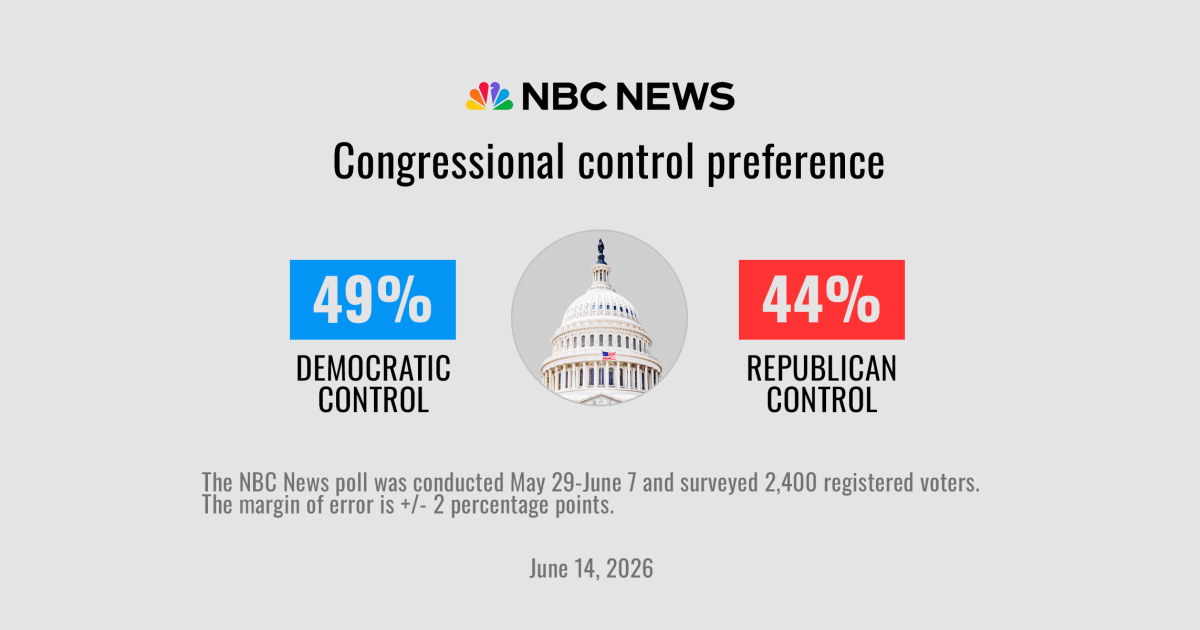
NBC News Poll Signals Shifting Tides in Congressional Elections
What Happened: Democrats Show an Edge in Latest NBC News Poll
Recent polling data released by NBC News has put the spotlight on the upcoming congressional elections, revealing a dynamic where Democrats currently hold an advantage. The poll indicates that voter sentiment is leaning towards the Democratic party in the ongoing contest for control of the legislative chambers. A key takeaway from the survey is the notably poor approval ratings received by President Trump, a factor that often influences the broader political landscape and the performance of his party.
The findings suggest a challenging environment for Republicans as the election cycle progresses. Beyond the general lean towards Democrats, the poll also highlights concerns about voter turnout and engagement. One report from CNN suggests that the decision of who stays home might pose as significant a threat to Republicans as the active voting base. This indicates a complex interplay of voter apathy and active participation that could shape the outcome.
Why It Matters: The Implications for Party Control and Future Elections
The results of the NBC News poll carry significant weight for both major political parties. An edge for Democrats, especially when coupled with low presidential approval ratings, often translates into a favorable environment for opposition parties seeking to gain seats in Congress. This can lead to shifts in legislative power, impacting the ability to pass laws, confirm appointments, and shape policy agendas for the next term.
“The current polling data suggests a potential wave election favoring Democrats, driven by a combination of dissatisfaction with the incumbent party and a more energized opposition base.”
Furthermore, the analysis points to potential long-term implications. A report from The Center Square suggests that the current trends could spell disaster for Republicans in the 2026 midterms, implying that the issues highlighted in the current poll might have a lasting impact on the party's electoral prospects. This forward-looking perspective underscores the importance of understanding the underlying sentiments revealed by the poll.
Background Context: Tracking Political Sentiment
Political polls serve as crucial barometers of public opinion, offering snapshots of voter sentiment at specific moments in time. These surveys, when conducted by reputable organizations like NBC News, involve rigorous methodologies to ensure representative samples. They typically ask a range of questions about voter preferences, key issues, and candidate/party approval ratings.
The current political climate is characterized by intense partisan division and a focus on key issues such as the economy, social policies, and the performance of the current administration. President Trump's approval ratings have historically been a significant indicator of the Republican party's electoral health. His performance in polls often correlates with the success or struggles of Republican candidates in congressional and other races.
The mention of voter turnout and engagement adds another layer of complexity. Elections are not solely decided by the number of people who prefer one party over another, but also by who actually casts a ballot. Factors like voter enthusiasm, access to polling stations, and campaign mobilization efforts all play a critical role. The CNN report’s emphasis on “who stays home” highlights the nuanced nature of predicting election outcomes based on polling alone.
What to Expect Next: Analyzing the Trajectory
As the election cycle unfolds, the trends identified in the NBC News poll will undoubtedly be closely watched and debated. Further polling will be essential to determine if these initial advantages for Democrats persist or if there are shifts in voter sentiment. Campaign strategies will likely adapt based on this data, with parties focusing on mobilizing their base and persuading undecided voters.
The performance of President Trump will remain a central factor. His ability to rally support and influence voter turnout among his base, as well as the extent to which his approval ratings alienate other segments of the electorate, will be critical. The Republican party will need to address the concerns raised by the poll, potentially by adjusting their messaging or focusing on specific policy areas that resonate with a broader range of voters.
Ultimately, the path to victory in congressional elections is multifaceted. While polls provide valuable insights, they are not definitive predictions. The coming months will involve intense campaigning, debates on key issues, and significant efforts to engage voters. The data from NBC News serves as an important early indicator, setting the stage for what promises to be a closely contested electoral landscape.