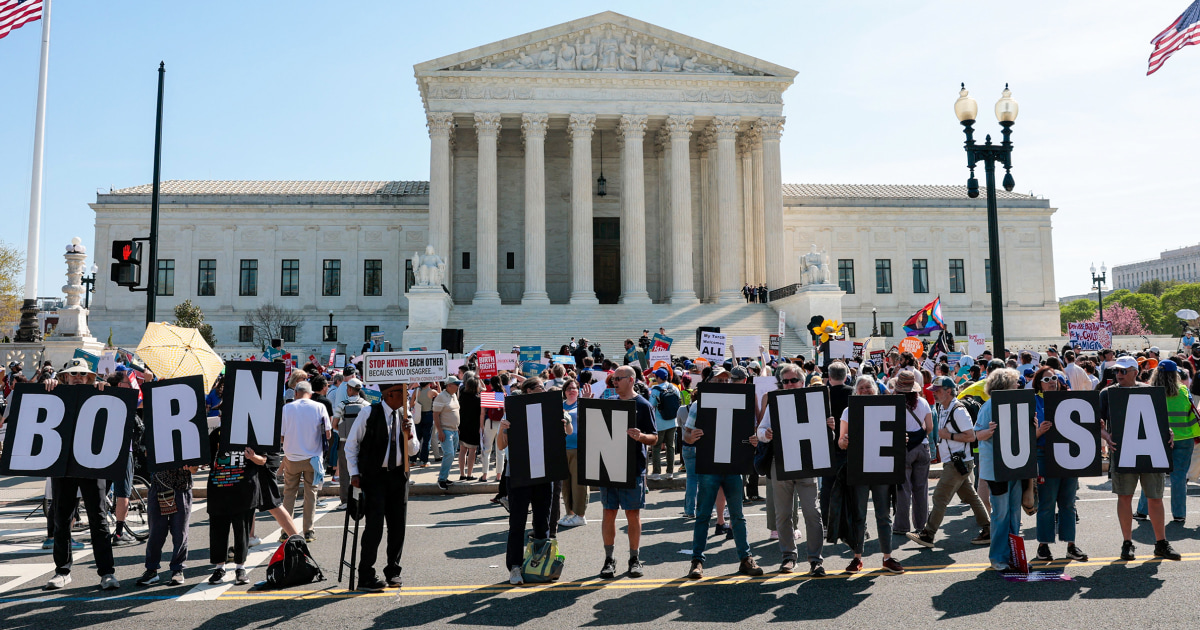
Birthright Citizenship in the U.S.: A Persistent Debate Rekindled
The principle of birthright citizenship, often referred to as jus soli, has long been a cornerstone of American identity and law. Under the 14th Amendment, ratified after the Civil War, it's established that "all persons born or naturalized in the United States, and subject to its jurisdiction, are citizens of the United States and of the State wherein they reside." However, this foundational concept has periodically come under scrutiny, most recently with renewed attention due to the actions, or inactions, of the Trump administration.
What Happened? The Trump Administration's Stance
Recent news reports from NBC News, The Washington Post, and SCOTUSblog indicate that the Trump administration, despite former President Donald Trump's public vows and statements suggesting an intent to challenge birthright citizenship, ultimately did not pursue a rehearing of relevant cases before the Supreme Court. Trump had previously expressed a desire to end birthright citizenship, often linking it to immigration policy and suggesting it encouraged "birth tourism." However, the administration appears to have stopped short of taking the necessary legal steps to bring the issue before the Supreme Court for a definitive ruling. This lack of action leaves the long-standing interpretation of the 14th Amendment, which has historically been understood to grant citizenship to virtually everyone born on U.S. soil, intact.
Why Does This Matter? Implications of Birthright Citizenship
Birthright citizenship is a critical element of U.S. immigration law and national identity. Its significance lies in several key areas:
- Legal Stability: It provides a clear and consistent framework for determining citizenship, preventing a large stateless population within the country.
- Social Cohesion: It has historically been seen as a tool for assimilation, integrating immigrant communities into the fabric of American society by granting their children full citizenship rights.
- Economic Impact: Children born in the U.S. gain access to education, employment, and social security benefits, contributing to the economy and tax base.
- Constitutional Interpretation: The debate touches upon the interpretation of the 14th Amendment, with differing views on whether "subject to its jurisdiction" excludes children of undocumented immigrants.
The decision not to challenge birthright citizenship at the Supreme Court means these implications remain governed by the existing legal precedent. For millions of individuals, including children born in the U.S. to non-citizen parents, their legal status as citizens remains secure under current law, subject to the established interpretation of the 14th Amendment.
Background Context: A Historical and Legal Overview
The concept of birthright citizenship in the United States has deep historical roots. While the idea of jus soli was generally accepted under English common law and thus inherited by the U.S., its legal foundation was solidified by the 14th Amendment, passed in 1868. The amendment aimed to ensure that newly freed slaves were recognized as citizens, preventing states from denying them rights.
"All persons born or naturalized in the United States, and subject to its jurisdiction, are citizens of the United States and of the State wherein they reside." - The 14th Amendment, Section 1
Over the decades, various court cases have affirmed this understanding. The Supreme Court case United States v. Wong Kim Ark (1898) is a landmark decision that upheld the citizenship of a man born in the U.S. to Chinese parents who were legal residents but not eligible for citizenship themselves. The court ruled that he was a U.S. citizen under the 14th Amendment.
Despite this historical precedent, challenges have persisted. Critics often argue that the 14th Amendment was not intended to grant citizenship to children of individuals who are not legally present in the country. This interpretation, however, has been largely rejected by mainstream legal scholars and courts. The Trump administration's renewed focus on this issue brought these differing interpretations back into public discourse, highlighting the ongoing tension between strict immigration enforcement and the constitutional guarantee of birthright citizenship.
What to Expect Next: The Future of Birthright Citizenship Debate
While the Trump administration's inaction has temporarily quelled the immediate threat of a Supreme Court challenge, the underlying debate over birthright citizenship is far from over. Several factors suggest that this issue will likely remain a topic of discussion and potential legal maneuvering:
- Ongoing Political Discourse: Birthright citizenship is a potent issue in political campaigns, particularly concerning immigration. Future administrations or political movements may continue to advocate for its reinterpretation or modification.
- Potential Legislative Action: While a constitutional amendment to alter birthright citizenship is highly improbable due to the difficulty of ratification, legislative efforts or policy changes at the federal or state level could attempt to indirectly impact the issue, though their constitutionality would be heavily scrutinized.
- Future Court Cases: New legal challenges could arise, potentially through different avenues or under different administrations, seeking to push the boundaries of current interpretation. The phrase "subject to its jurisdiction" remains a focal point for those seeking to limit birthright citizenship.
- Shifting Public Opinion: Public sentiment on immigration and citizenship can influence political will and legal strategies.
For now, the legal status quo remains. Children born in the United States continue to be recognized as citizens under the established interpretation of the 14th Amendment. However, the fervor surrounding the issue, amplified by recent news about the Trump administration's decisions, ensures that birthright citizenship will likely remain a significant point of discussion in American legal and political landscapes.