SpaceX Rocket's Lunar Fate: An Unintentional Collision with the Moon
What Happened? A Rocket's Long Journey Ends on the Moon
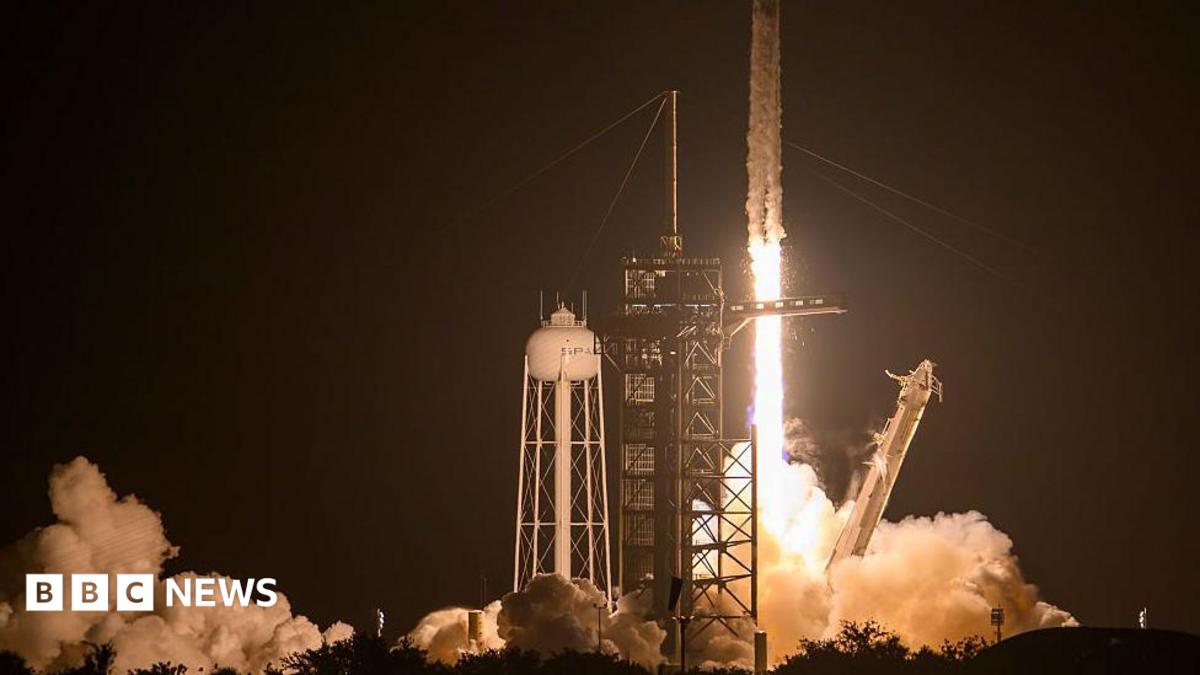
A piece of space hardware, specifically the first stage booster of a SpaceX Falcon 9 rocket, is widely believed to have impacted the Moon. This particular booster was launched in February 2015 to propel the Deep Space Climate Observatory (DSCOVR) satellite towards its destination. After completing its primary mission of boosting the satellite, the rocket's upper stage and the booster were discarded. While the upper stage likely burned up upon re-entry into Earth's atmosphere or was disposed of intentionally, the booster embarked on a much longer, more complex trajectory.
For nearly seven years, this spent rocket stage has been in a complex orbit around Earth and the Moon, a victim of gravitational nudges and orbital mechanics. Astronomers, particularly those like Bill Gray who tracks near-Earth objects and space debris, had been closely monitoring its path. Gray, using his Project Pluto software, calculated that the booster's trajectory was leading it on a collision course with the Moon. While initially uncertain if it was a SpaceX booster or a Chinese one (due to overlapping orbital characteristics of some Chinese Long March boosters), further analysis and the known launch history pointed strongly towards the SpaceX Falcon 9 from the DSCOVR mission.
Why Does This Matter? The Significance of an Accidental Lunar Impact
This event, while not a catastrophic mission failure for SpaceX, holds significant implications. Firstly, it represents the first time a human-made object has unintentionally crashed into the Moon in this manner. Previous lunar missions have either ended with controlled landings or intentional crashes (often called "slam dunks") for scientific purposes, such as seismic studies by the Apollo missions. The unintentional nature of this impact raises questions about the management of space debris and the long-term trajectory of discarded rocket stages.
Secondly, the impact, though likely not large enough to cause significant geological changes, will create a small crater on the lunar surface. This crater, along with the ejected lunar soil, could be a subject of scientific study. The unintentional nature also underscores the challenges of tracking and predicting the paths of space debris, especially objects in complex, non-standard orbits. As more launches occur and more hardware is sent into space, the accumulation of space junk becomes an increasingly pressing concern for the future of space exploration and astronomy.
Background Context: Space Debris and Lunar Missions
The concept of space debris is not new. Earth's orbit is littered with defunct satellites, spent rocket stages, and fragments from collisions. However, the debris in lunar trajectories or interplanetary space presents a different set of challenges. These objects are often less predictable and harder to track than those in Earth orbit. The DSCOVR mission itself was designed to provide advanced warning of solar storms by observing the sun from the L1 Lagrange point between Earth and the Sun.
The Falcon 9 booster, having completed its task of propelling DSCOVR, entered a chaotic orbit for years before its lunar rendezvous. This highlights the long lifespan and unpredictable journeys of discarded space hardware.
The long journey of this Falcon 9 booster is a testament to orbital mechanics and the sheer amount of hardware that has been deployed in space over the decades. While SpaceX is known for its reusable rocket technology, aiming to recover and reuse boosters, not all stages are recovered, especially those on missions requiring trajectories that make recovery impractical or impossible. The DSCOVR mission was one such case where the booster's trajectory was not optimized for return to Earth.
What to Expect Next: Monitoring and Future Implications
Scientists will be eager to analyze any data that emerges from the impact site. Telescopes on Earth and potentially orbiting lunar observatories may attempt to observe the crater formed by the impact. Further refinements in tracking technologies will likely be spurred by such events, improving our ability to predict the paths of errant space debris.
This incident also serves as a timely reminder for space agencies and private companies about the growing problem of space junk. As the frequency of space launches increases, particularly with ambitious plans for lunar bases and Mars missions, robust strategies for managing and mitigating space debris will become even more critical. While this particular impact was unintentional and relatively minor in the grand scheme of space exploration, it highlights a growing challenge that needs proactive solutions.
Moving forward, the focus will remain on developing better tracking systems and, more importantly, implementing stricter guidelines for de-orbiting or disposing of rocket stages and spacecraft at the end of their operational lives. The Moon, once a pristine celestial body, is now, unintentionally, a graveyard for some of our earliest ventures into deep space.