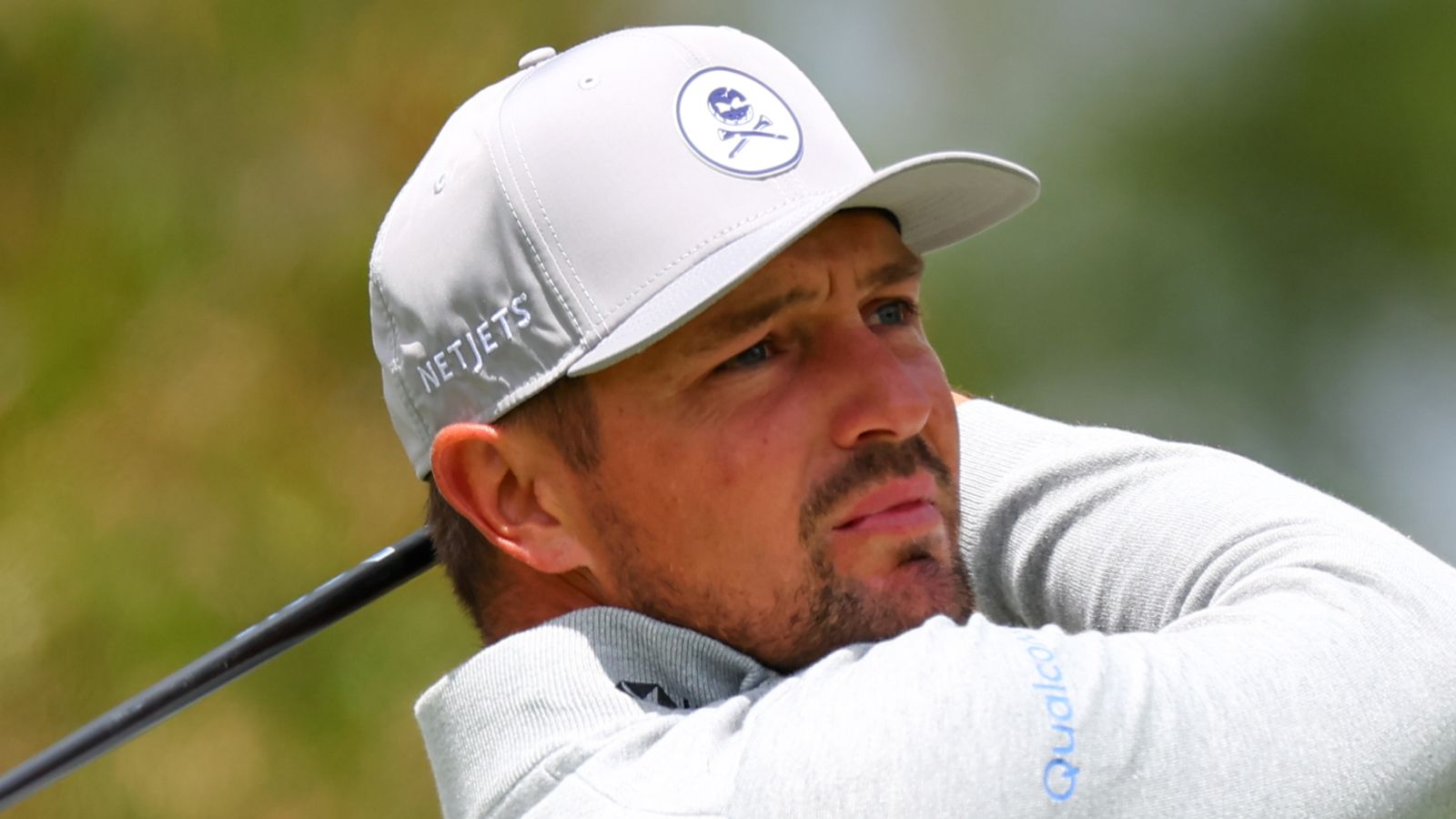
Faldo Questions DeChambeau's Links Golf Strategy Ahead of The Open
The rivalry of ideas in professional golf is often as captivating as the competition on the course. Ahead of The Open Championship, one of golf's four major tournaments, a notable critique has emerged from a true legend of the game. Sir Nick Faldo, a revered three-time Open champion, has voiced significant concerns about Bryson DeChambeau's ability to navigate the unique challenges of links golf, suggesting the American phenom possesses "zero clue of strategy" when it comes to this particular format.
What Happened?
Sir Nick Faldo, speaking to Sky Sports, did not hold back in his assessment of Bryson DeChambeau's strategic approach to links golf. Faldo, whose own career was defined by mastery of the traditional links style, believes DeChambeau's power-focused game, honed on U.S. courses, may not translate effectively to the often unpredictable and firm fairways and greens of an Open venue. The comments come at a critical time, with DeChambeau preparing to compete in The Open, an event where strategy and adaptability are often as crucial as raw talent.
The context for Faldo's remarks appears to stem from DeChambeau's playing style, which emphasizes brute force and a scientific approach to club selection and ball striking. While this strategy has yielded considerable success in certain tournaments, Faldo suggests it overlooks the nuanced requirements of links golf. These include dealing with wind, firm turf, intricate course architecture, and the necessity of precise ball control rather than simply distance off the tee.
Why It Matters: A Clash of Golfing Philosophies
This discussion is significant because it highlights a fundamental divergence in how golf can be played and strategized at the highest level. Faldo represents a generation of golfers who excelled through adaptability, course management, and a deep understanding of how to play different types of golf. His critique implies that DeChambeau's "bomb and gouge" approach, while effective elsewhere, might be ill-suited for the historic Scottish and English links courses that define The Open.
"I'd say it to his face," Faldo reportedly stated, indicating a willingness to confront DeChambeau directly with his views. This assertive stance underscores the seriousness with which Faldo views the potential disconnect between DeChambeau's strategy and the demands of links play.
Furthermore, the comments from other golf figures, such as a prediction from a three-time PGA Tour winner about DeChambeau potentially missing the cut entirely, amplify the debate. Such bold statements suggest a wider sentiment within the golf community that DeChambeau faces an uphill battle adapting his game. The pressure on DeChambeau, already immense as a major champion and a prominent figure in the sport, is undoubtedly amplified by these high-profile criticisms on the eve of a major championship.
Background Context: DeChambeau's Rise and Links Golf
Bryson DeChambeau has carved out a unique niche in modern golf with his "scientist" persona and his commitment to maximizing distance. His approach involves meticulous analysis of physics, biomechanics, and equipment to gain every possible advantage. This has led to numerous victories, including a major championship title, and has challenged traditional golf wisdom.
Links golf, on the other hand, is the original form of the game, originating in Scotland. These courses are typically characterized by their coastal locations, sandy soil, undulating fairways, deep pot bunkers, and the ever-present influence of the wind. Strategies on links courses often involve keeping the ball low, using the ground to control bounces, and employing a wider variety of shots than typically seen on parkland courses. Legends like Faldo, Jack Nicklaus, and Tom Watson built careers by mastering these conditions.
Faldo's experience at The Open is unparalleled. His three victories came in different eras and on different links courses, demonstrating a profound ability to adapt and excel. His insights carry weight because he has not only competed but won consistently in the exact environment DeChambeau is now facing scrutiny for.
What to Expect Next
The focus will now inevitably shift to DeChambeau's performance at The Open. All eyes will be on how he handles the course, the conditions, and the strategic demands. Will Faldo's critique prove prescient, leading to a difficult week for DeChambeau? Or will the American's prodigious talent and adaptive capabilities allow him to overcome the challenges and silence his critics?
The conversation also extends to the broader implications for golf's evolving strategies. As power and analytical approaches continue to dominate, questions arise about the enduring relevance of traditional skills and course management. DeChambeau's performance at The Open will not only be a personal test but also a significant data point in this ongoing debate within the sport.
Fans and analysts will be keenly observing DeChambeau's shot selection, his management of the wind, and his ability to adapt to the unpredictable bounces that are a hallmark of links golf. Whether he embraces a different strategy or sticks to his guns, his performance will be dissected under the critical lens of golf history and contemporary commentary, especially from figures like Sir Nick Faldo.