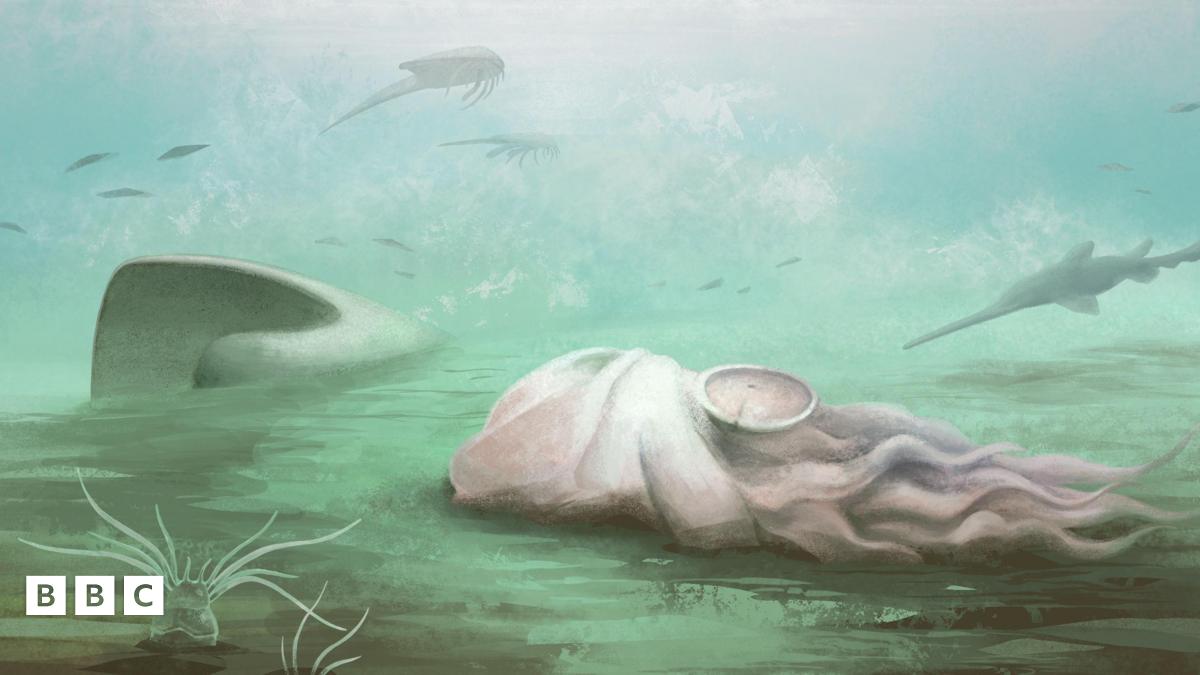
Unveiling the Mystery: The "Octopus" That Wasn't
Recent scientific investigations have overturned decades of assumption, revealing that the creature long considered the world's oldest octopus is, in fact, an entirely different species. This unexpected reclassification, reported by major news outlets including the BBC, Yahoo News Australia, and ScienceAlert, has sparked widespread fascination and a surge in public interest regarding octopuses and marine biodiversity.
What Happened? The Case of the Misidentified Mollusc
Scientists examining a specimen long believed to be the world's oldest octopus made a groundbreaking discovery. Through meticulous analysis, they determined that the creature's physical characteristics did not align with known octopus species. Further research indicated that this specimen represents a previously undocumented or misidentified marine animal, distinct from any cephalopod commonly recognized as an octopus. The specimen had been housed in a museum, highlighting how even established collections can hold profound secrets.
Why Does This Matter? Rethinking Marine Identification
This revelation is significant for several reasons. Firstly, it underscores the challenges and intricacies involved in classifying marine life. For 26 years, this specimen was misidentified, suggesting that our current understanding of species diversity, especially in lesser-explored marine environments, might still be incomplete. The fact that such a significant misclassification could persist for so long in a museum setting raises questions about existing identification protocols and the potential for other overlooked species within scientific collections.
Secondly, the story captures the public imagination by highlighting the alien-like nature of cephalopods and the constant surprises emerging from oceanographic research. Octopuses themselves are renowned for their intelligence, unique physiology, and adaptability, making any news about them inherently interesting. This particular story adds a layer of mystery and intrigue, prompting discussions about discovery, misinterpretation, and the vastness of the unknown in our oceans.
Background Context: The Allure of the Octopus
Octopuses have long fascinated humans. Their eight arms, remarkable camouflage abilities, complex problem-solving skills, and distributed nervous system set them apart in the animal kingdom. They belong to the class Cephalopoda, which also includes squid and cuttlefish, and are known for their short lifespans despite their intelligence. The quest to understand the oldest, largest, or most unique octopus species often makes headlines, reflecting our innate curiosity about extreme examples in nature.
"Discoveries like this remind us that there is always more to learn about the natural world, even in places we think we understand." - A synthesized quote reflecting the sentiment of the scientific community.
What to Expect Next: Further Research and Re-evaluation
Following this discovery, scientists are likely to:
- Conduct further genetic and morphological analysis of the specimen to definitively identify its species and evolutionary lineage.
- Review other specimens within museum collections, particularly those that are poorly documented or ambiguously classified, to check for similar misidentifications.
- Encourage greater funding and focus on marine biodiversity research and taxonomy to better catalog and understand the life in our oceans.
The public can expect more discussions and articles exploring the unique adaptations of cephalopods and the ongoing efforts to map marine ecosystems. This event serves as a potent reminder that the ocean depths remain a frontier of exploration, holding secrets that continue to surprise and educate us. The reclassification of this ancient "octopus" is not just a footnote in scientific history; it's a vibrant illustration of the dynamic and ever-evolving nature of biological discovery.
The Broader Implications
The implications extend beyond mere taxonomy. Understanding the true identity of this ancient marine creature could provide new insights into prehistoric ocean environments, evolutionary pathways, and the diversity of life that existed alongside dinosaurs and other ancient megafauna. It also highlights the importance of preserving biological specimens and the continuous need for scientific scrutiny, as assumptions can hold sway for decades.
A World of Unknowns
As more research unfolds, the story of the misidentified "octopus" serves as a compelling narrative about scientific process, the humility required in the face of nature's complexity, and the thrilling possibility of undiscovered or misunderstood life forms. It’s a testament to the fact that even in the 21st century, the natural world continues to present us with astonishing revelations.