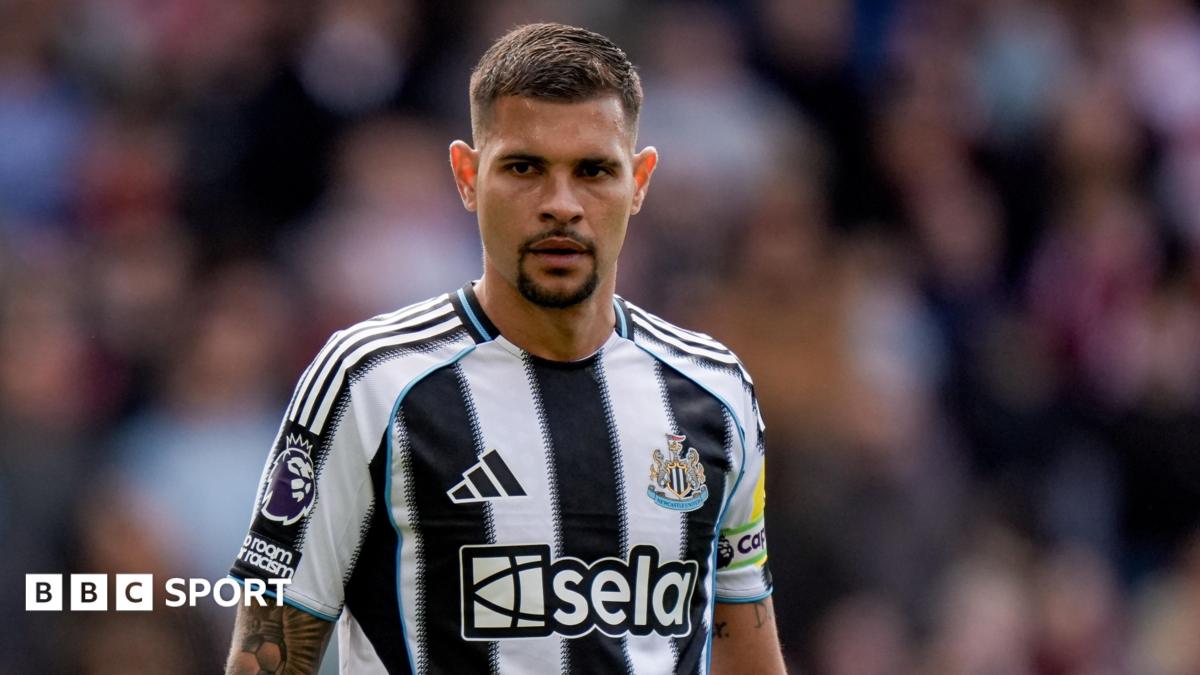
Bruno Guimarães Reportedly Seeks Arsenal Move, Shaking Newcastle United's Foundations
Newcastle United finds itself at the center of a significant transfer storm today as reports emerge that key midfielder Bruno Guimarães has communicated his desire to leave the club and join Arsenal. This news, circulating rapidly through sports media, has ignited fervent discussion among fans and pundits alike, questioning the future of one of the Premier League's most exciting talents.
What Happened?
According to multiple credible sources, including the BBC, Sky Sports, and The Athletic, Bruno Guimarães has informed Newcastle United's hierarchy that he wishes to pursue a transfer to Arsenal. The timing of this revelation is particularly noteworthy, with reports suggesting that Guimarães made his feelings known to the club following Brazil's departure from the World Cup. While the specific details of the conversations remain private, the reported sentiment indicates a strong desire from the player to make the switch to the North London club.
Why Does This Matter?
The potential departure of Bruno Guimarães would represent a seismic blow to Newcastle United's aspirations. Since his arrival in January 2022, the Brazilian international has been transformative for the Magpies. His tenacious tackling, exquisite passing range, and crucial goals have provided the steel and flair needed to propel Newcastle up the Premier League table. He has become an indispensable figure, embodying the club's ambitious new era under its Saudi-backed ownership. Losing such a vital player, especially to a direct competitor like Arsenal, would not only disrupt Eddie Howe's well-drilled team but also send a concerning message about the club's ability to retain its top assets amidst interest from elite clubs. For Arsenal, securing Guimarães would be a massive coup, significantly bolstering their midfield options and strengthening their claim for domestic and European honors.
Background Context
Bruno Guimarães joined Newcastle from Olympique Lyonnais for a reported fee of £35 million, a significant investment that has proven its worth manifold. His immediate impact was undeniable, playing a crucial role in Newcastle's escape from relegation during the second half of the 2021-2022 season. His form has only continued to impress, establishing him as one of the league's premier defensive and box-to-box midfielders. His performances for Brazil, including at the World Cup, have further amplified his reputation on the global stage. This reported desire to leave suggests that even with Newcastle's ambitious project and considerable financial backing, the allure of a club like Arsenal, with its history and current trajectory under Mikel Arteta, remains a powerful draw for elite players seeking to compete at the very highest level consistently.
"Guimarães has been the heartbeat of our midfield since he arrived. If he truly wants to leave, it's a massive setback, but we have to respect his decision and try to rebuild." - A Newcastle fan representative
What to Expect Next
The situation is fluid and likely to develop rapidly. Newcastle United will undoubtedly be exploring all avenues to retain Guimarães, potentially offering improved terms or emphasizing the long-term vision of the club. However, if the player's desire to join Arsenal is resolute, the clubs will need to enter negotiations. Arsenal's financial capacity and willingness to meet Newcastle's valuation will be key factors. The transfer window dynamics, other potential targets, and the player's own contract situation will all play a role. Fans of both clubs will be eagerly awaiting official statements or further developments, as this potential transfer could significantly reshape the Premier League's competitive balance for seasons to come. It underscores the intense competition for talent and the constant maneuvering within the modern football transfer market.
- Player Profile: Bruno Guimarães is a dynamic Brazilian midfielder known for his defensive capabilities, passing accuracy, and ability to contribute offensively.
- Impact at Newcastle: He has been instrumental in the club's resurgence, providing stability and quality in the center of the park.
- Arsenal's Interest: The Gunners are reportedly seeking to strengthen their midfield, and Guimarães is seen as a top target.
- Transfer Implications: A move could drastically alter the power dynamics in the Premier League, impacting both clubs' ambitions.
The coming days and weeks promise to be crucial as Newcastle United faces the prospect of losing one of its most prized assets. Whether Guimarães stays to spearhead the project at St. James' Park or seeks a new challenge at the Emirates Stadium remains the burning question.