Guam
World100+ searches
Quick Answer
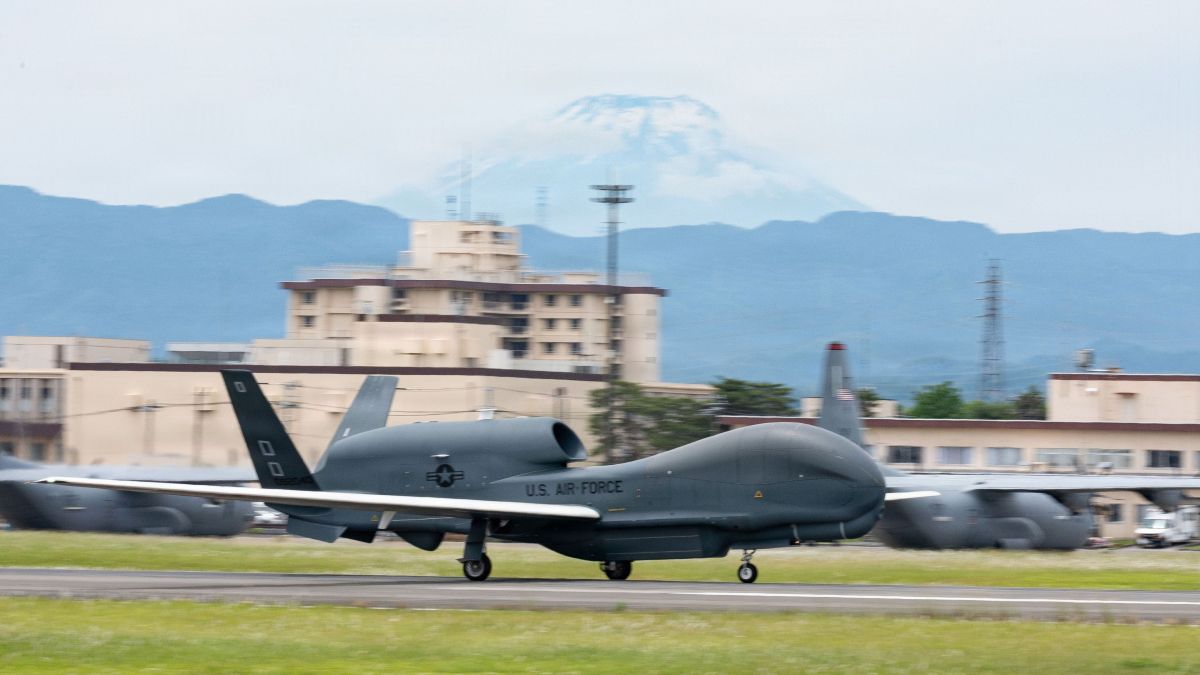
Guam is trending as the U.S. Air Force permanently relocates its RQ-4 Global Hawk reconnaissance drone squadron from Guam to Yokota Air Base in Japan. This strategic redeployment shifts advanced surveillance capabilities closer to potential areas of interest in the Indo-Pacific region.
Why Is This Trending?
The island of Guam is currently a focal point in discussions regarding U.S. military strategy in the Indo-Pacific. Recent news confirms the permanent relocation of the U.S. Air Force's RQ-4B Global Hawk reconnaissance drone squadron from Guam to Yokota Air Base, located in Japan. This move signifies a significant shift in the operational posture of these advanced intelligence, surveillance, and reconnaissance (ISR) assets.
The Global Hawk, known for its high-altitude, long-endurance capabilities, provides critical data gathering in complex environments. By repositioning the squadron to Japan, the U.S. military aims to enhance its ability to monitor and respond to evolving security dynamics in the region, placing these vital intelligence assets closer to key operational theaters and potential adversaries. This redeployment is part of a broader strategic adjustment to optimize force projection and readiness across the Pacific.
US Air Force Relocates Global Hawk Drones from Guam to Japan
The United States Air Force has officially completed the permanent relocation of its RQ-4B Global Hawk reconnaissance drone squadron from Andersen Air Force Base in Guam to Yokota Air Base in Japan. This significant strategic maneuver shifts key intelligence, surveillance, and reconnaissance (ISR) capabilities closer to areas of heightened geopolitical interest within the Indo-Pacific theater.
What Happened?
Recent reports from defense publications like Task & Purpose, The Aviationist, and MiGFlug have confirmed the permanent transfer of the RQ-4B Global Hawk fleet. These advanced, high-altitude, long-endurance (HALE) drones, capable of conducting persistent ISR missions over vast areas, were previously stationed in Guam. Their new home is Yokota Air Base, a crucial U.S. Air Force installation located in the Tokyo metropolitan area of Japan. This move is not a temporary deployment but a full squadron relocation, indicating a long-term strategic realignment.
Why Does This Matter?
The relocation of the Global Hawk squadron from Guam to Japan carries substantial strategic implications for U.S. defense posture in the Indo-Pacific. Guam has long served as a vital strategic hub for the U.S. military in the Western Pacific, providing forward basing for critical assets. However, Yokota Air Base's proximity to East Asia positions these advanced surveillance platforms nearer to potential areas of conflict and surveillance targets, including China, North Korea, and Russia.
Key reasons why this move is significant:
- Enhanced Reach and Responsiveness: Operating from Japan allows the Global Hawks to cover more territory with less transit time, enabling quicker response to developing intelligence requirements and potentially reducing operational costs associated with longer flights from Guam.
- Deterrence and Presence: Placing advanced ISR assets in Japan reinforces U.S. commitment to its allies and signals a strengthened presence, potentially acting as a deterrent to regional adversaries.
- Adaptation to Regional Dynamics: The move reflects the U.S. military's ongoing efforts to adapt its force structure and operational basing to the complex and rapidly evolving security environment in the Indo-Pacific.
Background Context: Guam as a Strategic Hub
Guam, a U.S. territory in Micronesia, has been a cornerstone of American military power projection in the Pacific for decades. Its strategic location makes it an ideal platform for deploying and supporting air and naval forces throughout the region. Andersen Air Force Base and Naval Base Guam are critical facilities that host a variety of U.S. assets, including bombers, submarines, and extensive logistical support infrastructure.
The RQ-4 Global Hawk, operated by the 319th Reconnaissance Wing, has been a fixture in Guam's aerial operations, conducting missions that gather crucial intelligence for U.S. policymakers and military commanders. These drones are equipped with sophisticated sensors that can monitor activities over vast geographical areas, day and night, in all weather conditions.
The decision to move the squadron is likely influenced by several factors, including the increasing importance of real-time intelligence gathering in the East China Sea and South China Sea, as well as the ongoing modernization and expansion of military capabilities by regional powers.
What to Expect Next
The permanent basing of the RQ-4 Global Hawk squadron at Yokota Air Base signals a new chapter in regional ISR operations. As the drones become fully integrated into operations from Japan, the U.S. military will likely leverage their capabilities to provide enhanced situational awareness across East Asia.
Further adjustments to force posture and basing arrangements in the Indo-Pacific can be anticipated as the U.S. military continues to prioritize readiness and strategic positioning in response to evolving global dynamics. The ongoing importance of Guam as a strategic location is unlikely to diminish, but its role may evolve as assets are repositioned to optimize effectiveness in different theaters.
The shift underscores a broader trend of military asset redistribution aimed at enhancing operational flexibility and strategic responsiveness in critical geopolitical zones.
Citizens and observers in the region will be watching closely as these newly positioned assets begin their operations from Japan, assessing their impact on regional security and stability. The strategic calculus in the Indo-Pacific is constantly shifting, and this relocation is a clear indicator of the U.S. military's commitment to maintaining a robust and adaptive presence.
Related News
Frequently Asked Questions
Why is Guam trending?
Guam is trending because the U.S. Air Force has permanently relocated its RQ-4 Global Hawk reconnaissance drone squadron from Guam to Japan. This strategic move shifts vital surveillance assets closer to areas of interest in the Indo-Pacific.
What happened with Guam?
The U.S. Air Force's squadron of RQ-4B Global Hawk drones has been moved from Guam to Yokota Air Base in Japan. This represents a permanent redeployment of advanced intelligence-gathering aircraft.
Where are the Global Hawk drones going?
The RQ-4 Global Hawk reconnaissance drones, previously based in Guam, are being permanently relocated to Yokota Air Base in Japan. This base is located within the Tokyo metropolitan area.
Why was the Global Hawk squadron moved from Guam?
The relocation aims to position critical ISR assets closer to key areas in East Asia, enhancing responsiveness and operational effectiveness in the Indo-Pacific region. It's part of a broader strategy to adapt to evolving regional security dynamics.