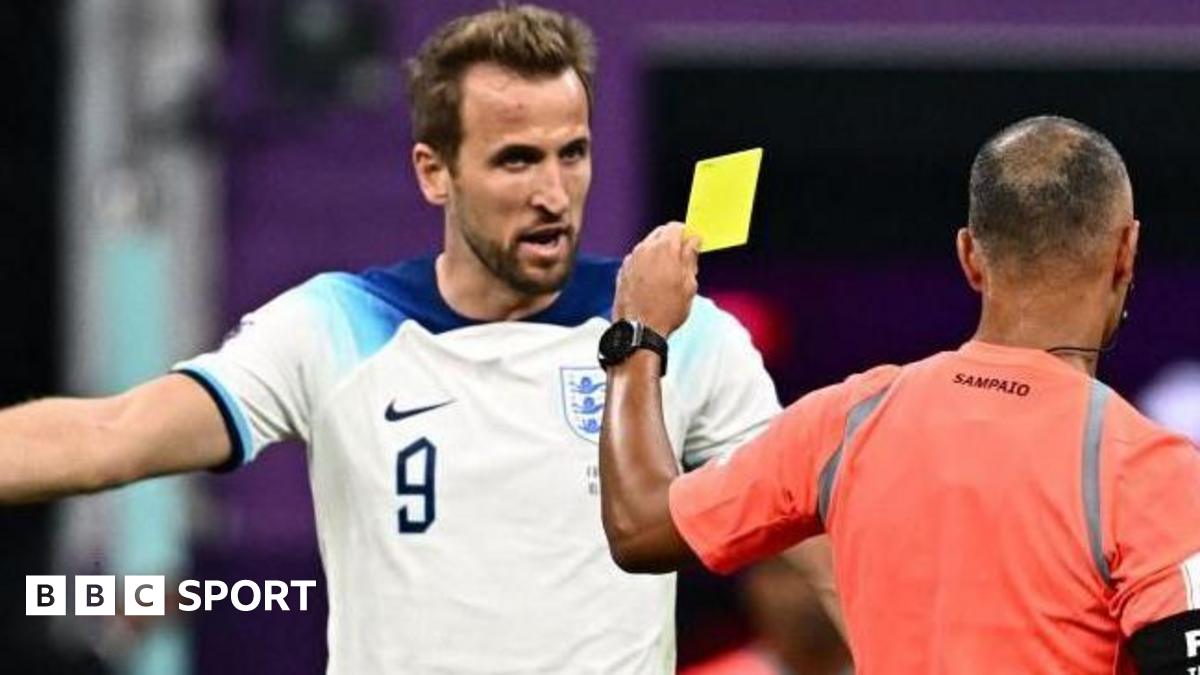
FIFA World Cup Set for Major Yellow Card Rule Change Amid Expansion
The world of football is abuzz with news of a potential shake-up to the disciplinary rules for the upcoming FIFA World Cup. Reports suggest that FIFA is on the verge of introducing a significant change to how yellow cards are handled, particularly concerning suspensions, in a move that could dramatically impact team strategies and player availability.
What Happened? The Yellow Card Amnesty Proposal
According to multiple reports from reputable sports news outlets including the BBC, RTE.ie, and The Sun, FIFA is seriously considering implementing a "yellow card amnesty" for the World Cup. This means that yellow cards accumulated by players during the group stage of the tournament may not carry over into the subsequent knockout rounds. Currently, a player who receives two yellow cards in separate matches during the tournament is suspended for the next game. The proposed change would effectively reset this count after the group stage, allowing players to participate in the round of 16 and beyond even if they had accrued yellow cards earlier, provided those cards were not part of a red card offense.
Why Does This Matter? Impact on Players and Competition
This potential rule change has significant implications for the FIFA World Cup. For players, it offers a degree of protection, preventing them from missing pivotal knockout matches due to accumulated yellow cards picked up in earlier, perhaps less consequential, fixtures. This is particularly relevant given the increased intensity and pressure of World Cup knockout stages.
“The aim is to ensure that the best players are available for the most crucial stages of the tournament, enhancing the spectacle for fans worldwide.”
From a strategic standpoint, teams and managers will need to adapt their approach. While caution will still be necessary, the pressure to substitute players who are on a yellow card during group stage matches might be lessened. This could lead to more aggressive or open play from teams who are already through or facing weaker opposition. Conversely, it could also be argued that it diminishes the disciplinary aspect of the game, where bookings serve as a deterrent.
Background Context: Tournament Expansion and FIFA's Considerations
The timing of this proposed rule change is not coincidental. FIFA is preparing for a significant expansion of the World Cup, with the tournament set to grow from 32 to 48 teams starting in 2026. This expansion will inevitably lead to an increase in the total number of matches played, placing greater demands on players and potentially increasing the instances of disciplinary actions.
FIFA, as the governing body, is tasked with ensuring the tournament runs smoothly and provides the best possible footballing experience. The challenge of managing disciplinary records across a much larger number of games and rounds in an expanded format is a complex one. The introduction of an amnesty could be seen as a pragmatic solution to simplify the disciplinary process and maintain the presence of key players throughout the competition.
Historically, FIFA has tweaked tournament rules to enhance the game. While a full "amnesty" is a notable potential shift, the concept of resetting disciplinary records at certain stages is not entirely unprecedented in various football competitions globally, though its application at the World Cup level would be a landmark decision.
What to Expect Next: Official Confirmation and Future Implications
While the news has been widely reported, it is important to note that these are currently proposals and potential rule changes. An official confirmation from FIFA is expected in the near future, likely following formal discussions and approvals by relevant committees.
If implemented, the yellow card amnesty will be a key talking point leading up to and during the next World Cup. Fans, pundits, and players will be closely watching how this rule impacts the dynamics of the matches. The expansion to 48 teams presents FIFA with numerous logistical and regulatory challenges, and this rule change is just one of the adjustments being considered to adapt to the new format.
The discussion also opens up broader questions about player welfare, the spirit of the game, and the balance between disciplinary measures and ensuring the highest level of competition. As the football world anticipates official word from FIFA, the focus remains on how this potential change will shape the future of the world's most prestigious football tournament.
- Potential Impact: Reduced risk of key players missing knockout games.
- Rationale: Simplifying disciplinary measures for an expanded tournament.
- Current Status: Reported proposals, awaiting official FIFA confirmation.
- Broader Context: FIFA adapting rules for a 48-team World Cup.