Ezekiel 25 17
Politics100+ searches
Quick Answer
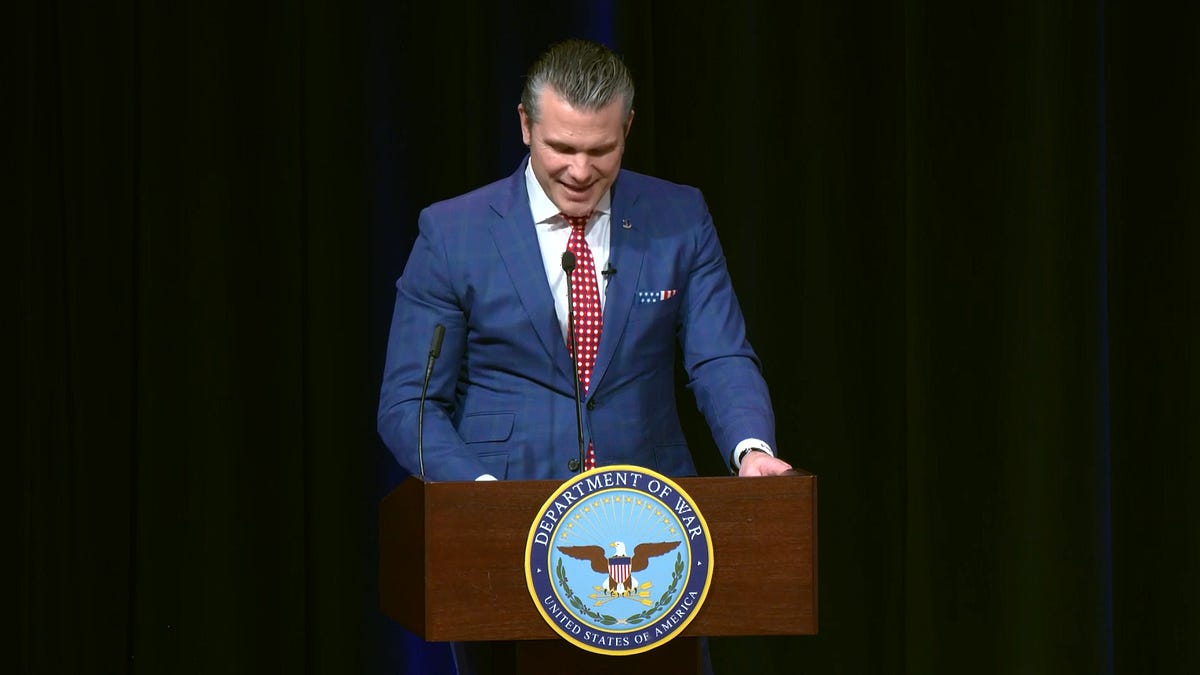
The verse Ezekiel 25:17 is trending due to its recitation by Pete Hegseth during a Pentagon worship service, sparking debate about the separation of church and state.
The verse Ezekiel 25:17 is trending due to its recitation by Pete Hegseth during a Pentagon worship service, sparking debate about the separation of church and state.
The verse Ezekiel 25:17 has become a trending topic due to its recent recitation by Pete Hegseth during a worship service held at the Pentagon. Hegseth, a known political commentator and former Army officer, reportedly used the passage, famously delivered by Samuel L. Jackson's character Jules Winnfield in the cult classic film 'Pulp Fiction,' as part of a prayer. The incident occurred during an April worship service, and news of it has since been reported by multiple media outlets, including The Independent and The Conversation, which focused on the broader implications for the separation of church and state.
While the biblical text itself is ancient, its recitation in this specific context—within a U.S. military headquarters and by a prominent public figure—has drawn significant attention. The 'Pulp Fiction' association adds a layer of cultural recognition, as many are familiar with the monologue from the film, often misattributing its origin solely to the movie rather than its biblical roots. However, the trending aspect stems directly from the confluence of the verse, its cinematic notoriety, and its use in a contemporary, politically charged setting.
The trending of Ezekiel 25:17 is not merely about a biblical verse or a movie quote; it’s about the ongoing national conversation surrounding the separation of church and state, particularly as it pertains to government institutions and public officials. The use of such a violent and culturally loaded passage within the Pentagon’s walls has raised questions about religious expression in the military and the potential for government endorsement of specific religious practices or interpretations.
Commentators have pointed out that the Roberts Supreme Court has shown a willingness to uphold religious expressions in public life. This context suggests that the legal landscape surrounding religious freedom is evolving, making events like Hegseth's prayer service particularly relevant. The debate centers on where the line is drawn between an individual's right to religious freedom and the constitutional mandate to avoid establishing or endorsing a religion. The choice of Ezekiel 25:17, with its graphic depiction of divine retribution, further intensifies this discussion, moving beyond general prayer to a specific, confrontational text.
The biblical passage itself, found in the Book of Ezekiel chapter 25, verse 17, reads:
“And I will execute great vengeance upon them with furious rebukes; and they shall know that I am the LORD, when I shall lay my vengeance upon them.” (King James Version)
The wording can vary slightly depending on the translation. In 'Pulp Fiction' (1994), Quentin Tarantino's iconic film, Samuel L. Jackson's character, Jules Winnfield, delivers a lengthy, stylized, and somewhat altered version of this verse before executing a mission. His recitation is a pivotal moment in the film, becoming one of the most quoted movie monologues of all time. The film version imbues the verse with a gangster-rap aesthetic, adding a layer of menace and pseudo-intellectualism that cemented its place in pop culture.
The juxtaposition of this culturally embedded, violent cinematic rendition with a prayer at a military facility creates a complex narrative. For many, the immediate association is with 'Pulp Fiction,' highlighting a disconnect between the sacred text and its secular, cinematic reinterpretation. For others, the focus remains on the theological and ethical implications of wielding such scripture, regardless of its popular cultural association.
The news surrounding Pete Hegseth's prayer service has reignited debates that have been ongoing for decades. On one side, proponents argue for robust religious freedom, asserting that officials like Hegseth have the right to express their faith, even in public settings, as long as it doesn't coerce others.
Conversely, critics express concern that such public displays, especially within institutions like the military, can be perceived as proselytizing or endorsing a particular religious viewpoint. They emphasize the Establishment Clause of the First Amendment, which prohibits the government from establishing a religion. The choice of a particularly violent passage from the Bible, as popularized by 'Pulp Fiction,' is seen by some as inappropriate for a formal service within a government building, regardless of the speaker's intent.
This discussion is further complicated by the current political climate, where religious and cultural issues are often at the forefront. The involvement of a public figure like Hegseth, who has a history of expressing strong opinions on faith and politics, ensures that the event will be scrutinized from multiple angles.
The trending of Ezekiel 25:17 is likely to persist as discussions about religious freedom, the separation of church and state, and the role of faith in public life continue. We can expect further analysis from legal scholars, religious leaders, and political commentators dissecting the implications of Hegseth's actions and similar events.
The legal ramifications, particularly concerning potential challenges to the separation of church and state, may also become clearer depending on how the issue evolves. Furthermore, the cultural dialogue between the biblical text and its 'Pulp Fiction' persona will likely remain a point of fascination and contention. Ultimately, this trending topic serves as a reminder of the complex and often contentious relationship between faith, public service, and constitutional principles in the United States.
Ezekiel 25:17 is trending because Pete Hegseth, a public figure, recited the verse during a worship service at the Pentagon. This event, and the verse's famous use in 'Pulp Fiction,' brought it back into public discussion and debate.
Pete Hegseth quoted Ezekiel 25:17, a verse also famously recited in 'Pulp Fiction,' during a Pentagon worship service. This action drew media attention and sparked discussions about religious expression in government settings.
Biblically, Ezekiel 25:17 is a prophecy of divine vengeance. The King James Version states, 'And I will execute great vengeance upon them with furious rebukes; and they shall know that I am the LORD, when I shall lay my vengeance upon them.'
The verse is widely known from the 1994 film 'Pulp Fiction,' where Samuel L. Jackson's character, Jules Winnfield, delivers a stylized, menacing monologue based on Ezekiel 25:17 before carrying out a mission. This cinematic version is what many people recognize.
The controversy arises from the location (the Pentagon) and the use of a violent biblical passage, popularized by a violent movie, by a public figure. Critics argue it blurs the lines of church-state separation, while others defend it as an exercise of religious freedom.